Cherry Shrimp Breeding: Berried Females, Eggs and Baby Shrimp
How cherry shrimp breed, how to tell males from females, how long berried shrimp carry eggs and how to raise more babies to adulthood.
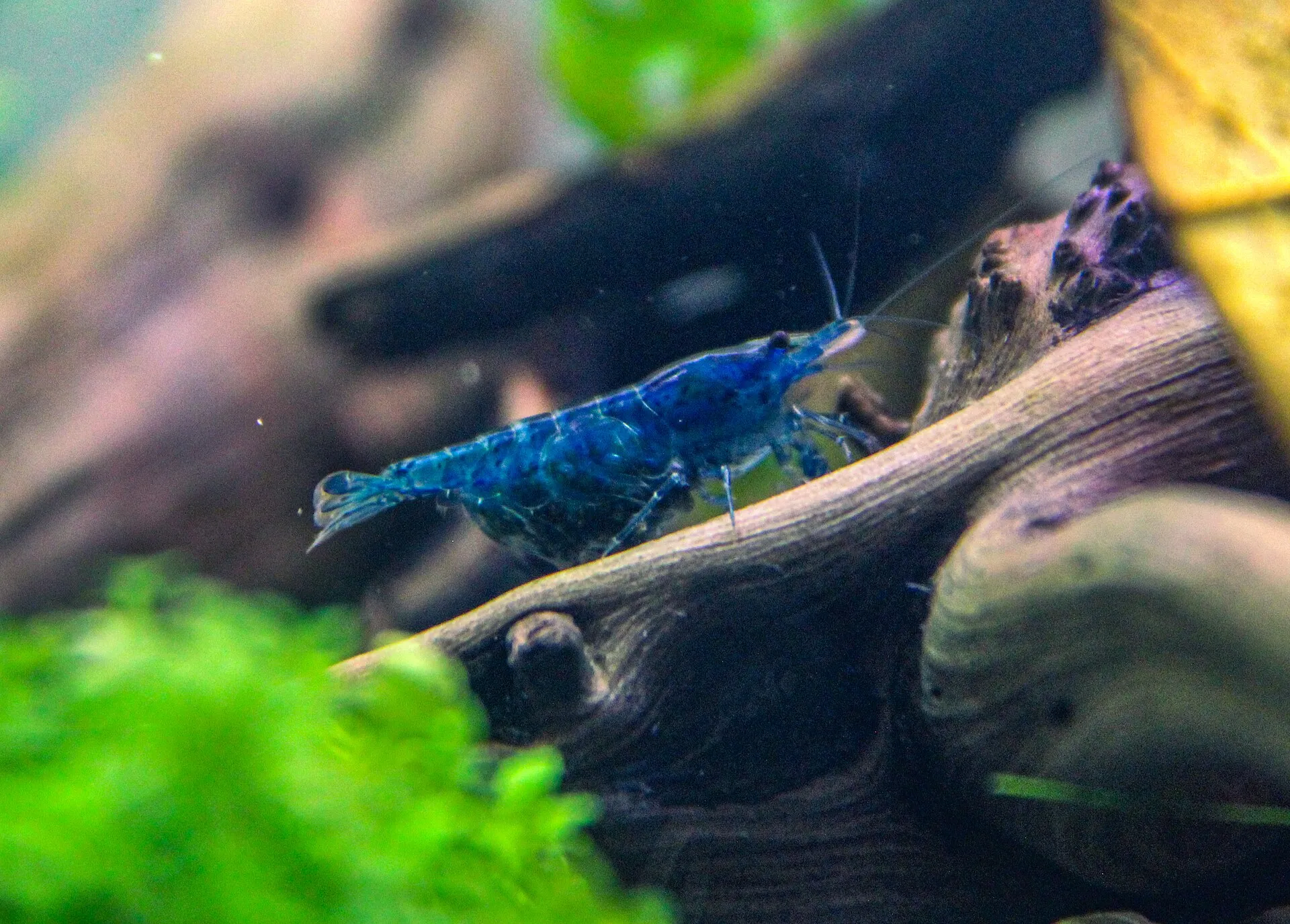 Photo: TonyZimbinski, CC BY-SA 4.0
In this guide
Short answer: cherry shrimp breed on their own in a stable, cycled tank. A female mates right after she molts, carries 20–30 eggs under her tail for about 3–4 weeks, and releases fully formed baby shrimp. There’s no larval stage, so you don’t need to do anything special, except keep the water stable and avoid fish that eat babies.
Males vs females
| Female | Male | |
|---|---|---|
| Size | Larger, up to about 3 cm | Smaller, about 2 cm |
| Color | Stronger, more solid color | Paler, more transparent |
| Body shape | Deeper, curved underside | Slim |
| Saddle | Often a yellow-green “saddle” behind the head | None |
The saddle is a patch of developing eggs in the ovaries, visible through the shell. A female with a saddle is getting ready to breed.
The breeding cycle
- Saddle. The female develops eggs in her ovaries, visible as the saddle.
- Molt. She molts and releases pheromones into the water.
- Mating. Males swim around the tank very actively looking for her. This “mating dance” is easy to spot. Mating takes seconds.
- Berried. The eggs move from the saddle to under her tail, where she holds them on her swimmerets. She’s now “berried”.
- Carrying. For 3–4 weeks she fans the eggs to keep oxygen flowing over them. The eggs darken as they develop, and you may see tiny eyes near the end.
- Hatching. Tiny, complete shrimp (about 1–2 mm) hatch and immediately hide.
Warmer water (around 24–26 °C) speeds up the cycle; cooler water slows it down.
Why berried shrimp drop their eggs
Sometimes a female loses her eggs early. Common causes:
- First-time mothers often drop their first clutch
- Stress: a big water change, a move to another tank, or aggressive tank mates
- Water swings in temperature, GH or TDS
- Poor water quality, especially ammonia or nitrite
Raising more babies
Baby shrimp are tiny and vulnerable for the first few weeks. To help more of them survive:
- Add moss and fine plants. Java moss, Christmas moss and floating plant roots give cover and food.
- Cover the filter intake. Use a sponge filter or put a pre-filter sponge on any intake.
- Keep the tank mature. Babies live on biofilm. A tank that has run for months feeds them far better than a new one.
- Add powdered food. It spreads through the tank and settles where babies graze.
- Skip fish. Nearly any fish will eat baby shrimp. Keep shrimp alone or with snails if you want a large colony.
My shrimp aren’t breeding
Check these in order:
- Do you have both sexes? In a group of fewer than 10, you might have only females or only males.
- Are they settled? New shrimp often need 1–2 months before they start breeding.
- Is the water in range? Check GH and temperature against our cherry shrimp water parameters guide.
- Are they fed well enough? A female needs food to develop eggs. See what cherry shrimp eat.
- Is it too cold? Below about 20 °C, breeding slows down a lot.
Frequently asked questions
How long are cherry shrimp pregnant?
About 3–4 weeks from when the eggs appear under the tail until they hatch, depending on temperature.
How many babies does a cherry shrimp have?
Usually 20–30 eggs per clutch, sometimes more in large females. Not all of them survive to adulthood.
How long until baby shrimp are adults?
About 3–4 months to reach full size and start breeding themselves.
Can different colors of Neocaridina breed together?
Yes. Red, blue, yellow and other Neocaridina color variants will crossbreed. Over generations, the babies tend to turn back into brown or clear “wild-type” shrimp. Keep one color per tank if you want to keep the colors.