Shrimp Molting Problems: The White Ring of Death and How to Prevent It
Why shrimp fail to molt, what the white ring of death means, how to tell a molt from a dead shrimp and how to fix GH and water changes to prevent it.
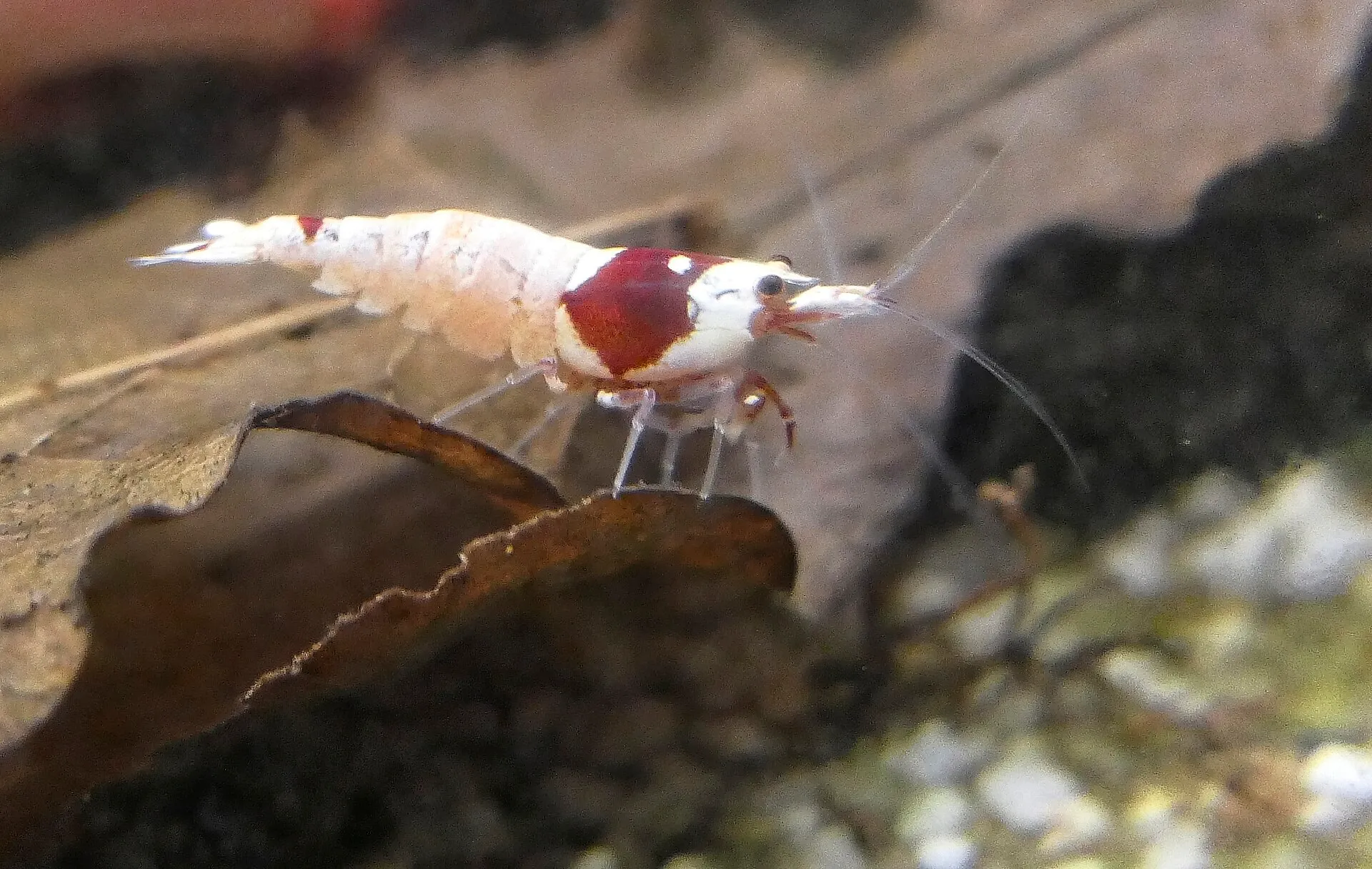 Photo: 5snake5, CC0
In this guide
Short answer: most failed molts are caused by the wrong GH (too low or too high) or by sudden changes in water, often from a large water change. The “white ring of death” is a white band between the head and the tail. It shows the shrimp couldn’t get out of its old shell. Keep GH stable at 6–8 dGH for cherry shrimp and change only 10–20% of the water at a time.
How molting works
A shrimp’s shell (exoskeleton) doesn’t grow. To get bigger, the shrimp builds a new, soft shell underneath, then splits the old one between the head and the body and wriggles out. The new shell hardens over the next hours using calcium and magnesium from the water.
Adult shrimp molt every few weeks; young shrimp molt more often. A healthy molt takes seconds to minutes.
Molt or dead shrimp?
Finding a shrimp-shaped shell in the tank is usually good news.
| Molt (empty shell) | Dead shrimp | |
|---|---|---|
| Color | Clear, pale, see-through | Solid color, often turning pink or white |
| Inside | Empty | Filled, body visible |
| Shape | Often split between head and body | Whole, usually curled |
| Movement | None, but all shrimp accounted for | One shrimp missing |
Leave molts in the tank. The shrimp eat them to recover minerals.
The white ring of death
A shrimp with a white band across its back, where the head section meets the body, is trying to molt but can’t get out. Many die within hours.
The white ring itself isn’t a disease. It’s the gap between the old and new shell. It means something made the molt fail.
Causes of failed molts
1. GH too low
Without enough calcium and magnesium, the new shell doesn’t form properly. This is common in soft tap water, RO water without remineralizer, and tanks where GH slowly drops.
Fix: test GH. For cherry shrimp, raise it slowly to 6–8 dGH with a shrimp remineralizer.
2. GH too high
Very hard water can make the old shell harder to shed.
Fix: if GH is above about 12–14 dGH, mix in RO or distilled water over several water changes.
3. Sudden water changes
A big water change can trigger a molt before the shrimp is ready. This is one of the most common causes.
Fix: change 10–20% weekly, match temperature and TDS, and add new water slowly.
4. Poor nutrition
Shrimp need minerals and protein to build a new shell.
Fix: feed a varied diet and a food with minerals or calcium. See our cherry shrimp feeding guide.
5. Toxins and stress
Copper, pesticides or ammonia stress shrimp and can disrupt molting.
Fix: go through the list in why cherry shrimp die.
Can you help a shrimp that’s stuck?
Usually not. Trying to pull the shell off almost always injures the shrimp. The best you can do is keep the water calm and stable, and fix the cause so other shrimp don’t have the same problem.
Prevention checklist
- GH 6–8 dGH for cherry shrimp (check our water parameters guide)
- Small, regular water changes instead of large, rare ones
- New water matched within 1–2 °C and within about 10–20 ppm TDS
- Varied diet, with minerals
- Top up evaporation with RO or distilled water
Frequently asked questions
How often do cherry shrimp molt?
Adults usually every 3–4 weeks; young shrimp more often, sometimes every week or two.
Why do shrimp hide after molting?
Their new shell is soft and they’re vulnerable until it hardens. They hide for a day or so.
Should I remove shrimp molts from the tank?
No. Shrimp eat them to recover minerals. Remove a molt only if it grows fuzzy mold.
Can a shrimp survive the white ring of death?
Occasionally one manages to finish the molt, but many don’t. Focus on finding the cause so it doesn’t happen to the rest of the colony.